
From 10 July 2027, no crypto-asset provider in the European Union will be able to keep an account that allows transactions to be hidden. A very specific article of the new European anti-money laundering regulation says so, and it points directly at the coins designed for that purpose, such as Monero or Zcash.
The short answer: the Monero ban and that of similar coins affects what regulated exchanges and custodians in the EU can offer, not holding them in your own wallet. And for tax purposes nothing changes: they are taxed like any other cryptocurrency. At CryptoImpuestos we have read the regulation to explain exactly what it bans, what it does not ban and what happens with the Spanish tax agency if you hold any.
 What exactly does the regulation say?
The rule is Regulation (EU) 2024/1624, known by its English acronym AMLR. Its article 79 prohibits credit institutions, financial institutions and crypto-asset service providers from keeping two things:
- Anonymous crypto-asset accounts.
- Any account that allows the holder to be anonymised or transactions to be obfuscated, “including through anonymity-enhancing coins”.
Article 90 sets the date: the regulation applies from 10 July 2027.
This is not the first step along this road. MiCA already requires trading platforms to prevent the admission of crypto-assets with a built-in anonymisation function, unless they can identify their holders and their history. That is why many European exchanges have been removing them for some time, as we explain in types of cryptocurrencies.
 Which coins fall under the ban?
The regulation does not give a list. It gives a definition: anonymity-enhancing coins are crypto-assets with built-in features to make information about transfers anonymous, whether systematically or optionally.
Those two words matter:
- Monero hides the sender, the recipient and the amount of its transactions by design. It is the case of systematic privacy.
- Zcash lets you choose between transparent addresses and protected (shielded) addresses. It is the case of optional privacy.
How far each specific case goes will be settled by the authorities and by each platform’s practice. The reasonable thing is to expect regulated providers to apply the criterion cautiously.
 Can I still hold Monero in my wallet?
Yes. The regulation does not ban individuals from holding these coins. The obligation falls on regulated entities, and the text itself makes clear that the ban does not apply to providers of hardware and software or of self-hosted wallets that do not have access to those wallets.
That is the key difference in the whole matter:
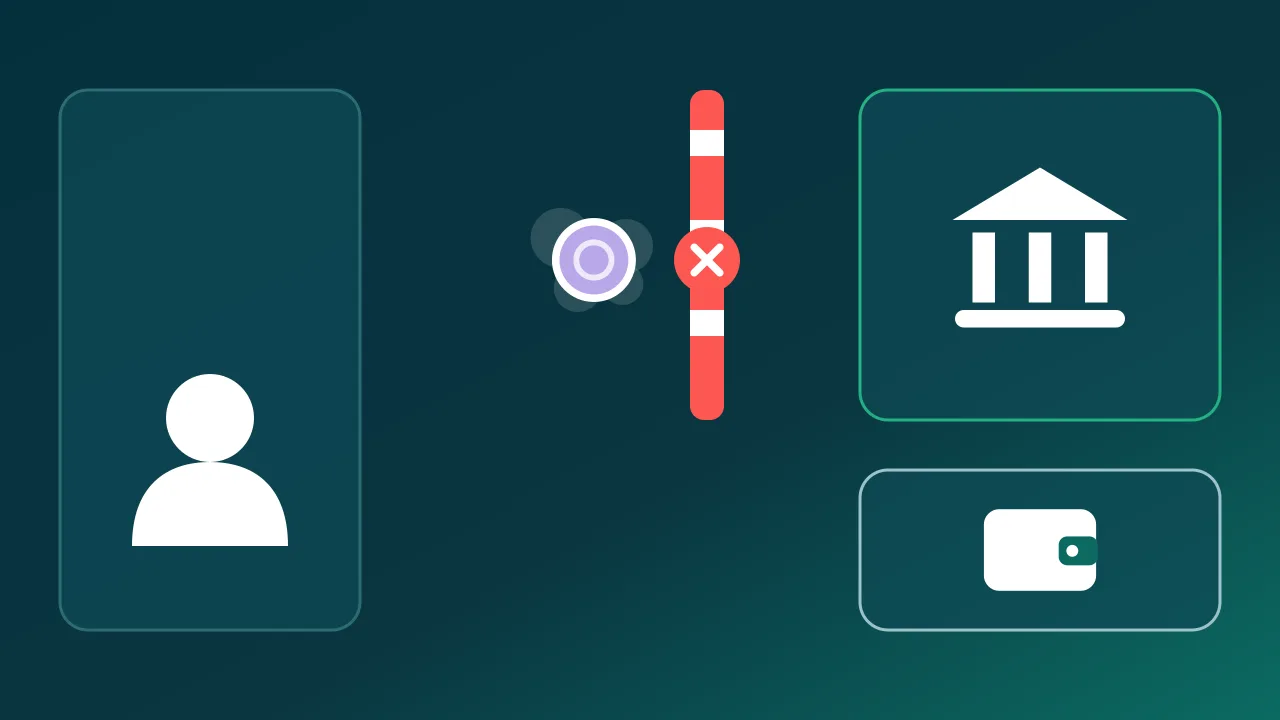
If you hold the key, the coin does not go through any provider. What changes is the route to and from the regulated system: it will be harder to buy, sell or convert them on a platform subject to the rule. If you are not clear on the difference between a balance and a key, start with what a crypto wallet is.
 What can happen if you hold them on an exchange?
Before July 2027, providers still supporting them will have to stop, and each one will decide how. The usual outcome in this kind of withdrawal is one of these three scenarios:
- Notice and a deadline to withdraw to your own wallet or to another platform.
- A deadline to sell or convert them yourself into another coin or into euros.
- Automatic conversion of whatever is still in the account when the deadline ends.
Read any communication you receive carefully, because each scenario has its own tax consequences, and they are not the same. And check that the notice is genuine: go in through the official app or website.
 How are Monero and Zcash taxed in Spain?
Like any other cryptocurrency. The fact that a coin hides data on its blockchain does not change the rules for whoever holds it:
- Sales for euros and swaps for another crypto produce a gain or a loss, calculated with the global FIFO method: the first ones you bought are the first ones you sell.
- Losses. If you sell for less than they cost you, you can offset them. We explain how in how to offset crypto losses in your tax return.
- Modelo 721. They are included if a foreign entity holds them in custody and your crypto in that situation exceeds €50,000 at 31 December. You have it all in the Modelo 721 guide.
- Source of funds. The tax agency can ask you to justify where the money came from. With these coins, on top of that, the blockchain does not help you prove it, so you depend on the history of the platform where you bought them.
 If they convert them for you, that is a swap too
This is the point that can bring the most surprises. If an exchange delists a coin and converts it into another for you, for the tax agency that is a swap: you have disposed of one cryptocurrency and received another. If it converts it into euros, it is a sale. It makes no difference that you did not decide it yourself.
This is not a theoretical case: MiCA has already forced European platforms to take similar decisions with other coins. We cover it in stablecoins and MiCA: what happens with USDT and USDC.
 What is worth checking before 2027?
Without telling you what to do with your coins, which is your decision, there are three things that depend only on having your paperwork in order:
- See whether your platform has published anything about these coins and on what deadlines.
- Download your history while you have access. It is what proves when you bought them and how much they cost you.
- Review how you declared your sales and swaps from previous years, including those of these coins.
Summary: what changes with the Monero and Zcash ban
| Question | Answer |
|---|---|
| Which rule is it? | Regulation (EU) 2024/1624, article 79 |
| From when? | 10 July 2027 |
| Who does it bind? | Credit institutions, financial institutions and crypto-asset providers |
| Which coins? | Anonymity-enhancing ones, systematic or optional; the regulation gives no list |
| Can I hold them in my wallet? | Yes, it is not banned for individuals |
| How are they taxed? | Like any crypto: a gain or a loss under global FIFO |
| And if the exchange converts them? | It is a swap (or a sale, if into euros) |
 Frequently asked questions
Is it illegal to hold Monero in Spain?
No. The regulation prohibits regulated providers from keeping accounts with these coins, not individuals from holding them in their own wallet.
Is Zcash banned too?
The regulation’s definition includes coins with optional anonymity, and Zcash allows shielded addresses. Each regulated provider will have to apply the rule to its own case, but it is reasonable to expect it to be affected.
Do I have to declare Monero if I hold it in my own wallet?
Holding it does not generate any tax. You declare when you sell it or exchange it for something else. And it does not go on Modelo 721, which is for what an entity abroad holds in custody.
My exchange has converted Monero into another coin. Is that taxed?
Yes. It is a swap, even though the platform carried it out. You calculate the gain or loss between what it cost you and its value at the moment of conversion.
Can the tax agency find out that I have Monero?
A purchase on a platform leaves a trace in its records, like any other transaction. And the tax agency can ask you to justify the source of your money.
Don’t let your history disappear with the coin
If a platform stops supporting your coins, the first thing that can get complicated is proving how and when you bought them. Send us your history and we will produce the document with all your exchanges and wallets using the global FIFO method the Spanish tax agency requires.
Sources: Regulation (EU) 2024/1624 (AMLR), articles 2, 79 and 90 · Regulation (EU) 2023/1114 (MiCA), article 76

Víctor Lázaro
Marketing Director, Cryptoimpuestos.es