Your crypto wallet does not have a single bitcoin inside it. Not the one on your phone, not the device you keep in a drawer, not your exchange account. It sounds like a technical detail, but understanding it is what separates those who keep their crypto from those who lose it to a fake message from “support”.
The short answer: a crypto wallet does not store coins, it stores keys. Your cryptocurrencies are recorded on the blockchain, a public ledger, and the wallet holds the private key that lets you move them. At CryptoImpuestos we see clients every week who do not know where their funds are or who holds their keys, so here is the explanation from scratch, without jargon.
 What is a crypto wallet?
A wallet is the tool that stores the keys to your cryptocurrencies and lets you use them: see your balance, receive and send. It can be an app on your phone, a browser extension or a physical device.
What it does not do is store the coins. Cryptocurrencies are not files copied from one place to another. They are entries on the blockchain, a public ledger shared by thousands of computers around the world that says how much is associated with each address.
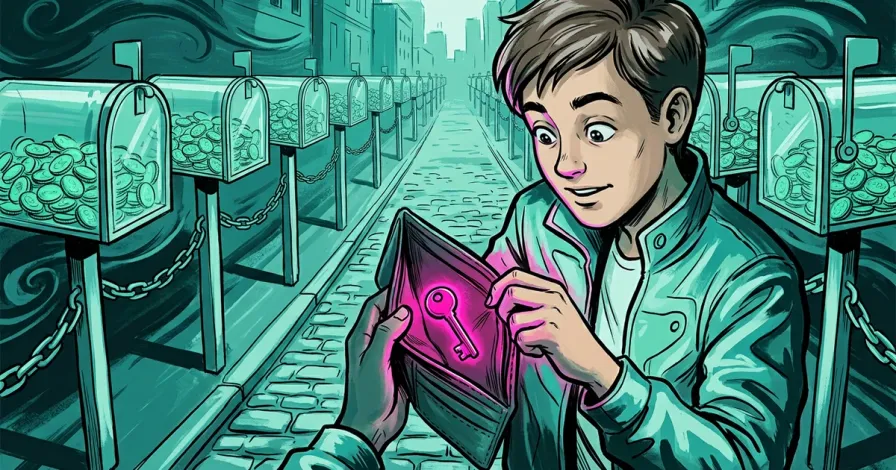
Think of a glass postbox in the middle of the street. Everyone can see what is inside and anyone can drop something through the slot. But only whoever has the key can open it and take out what it holds. The blockchain is the street full of postboxes. Your wallet is the key ring.
 Private key, public key and address: what it really stores
Inside a wallet there are three linked pieces:
- The private key. A huge secret number. It is what signs transactions, that is, what lets you spend. Whoever has it controls the funds.
- The public key. It is calculated from the private key. It lets the network check that a signature is valid without knowing the private key.
- The address. A short version of the public key. It is what you share so people can send you cryptocurrencies, like an account number.
The chain only works in one direction. The public key comes from the private key, and the address from the public key. Going the other way is impossible in practice: nobody can work out your private key from your address. That is why you can show your address without fear, but never your private key.
 What are the 12 or 24 words for?
When you create a wallet, it gives you a list of 12 or 24 words in a specific order. This is the seed phrase or recovery phrase. The words come from a standard list of 2,048 and have no relationship to each other.
All your private keys are calculated from that phrase, for all your addresses and all the networks that wallet uses. It is the master key to the building, not the key to one flat.
This has two direct consequences:
- If you lose your phone or the device, you do not lose your crypto. With the words you restore the wallet on another device and recover everything.
- If someone sees your words, they take everything. They do not need your phone or your password.
That is why the words are written down on paper or a metal plate and kept somewhere safe. Never in a photo, a note on your phone, an email or the cloud. And no legitimate party will ever ask you for them: not an exchange’s support team, not your wallet’s manufacturer, not the AEAT (Spanish tax agency), not us. Any message asking for them is a scam.
 Hot wallet and cold wallet: what is the difference?
The difference lies in where the private key lives.
- Hot wallet. An app on your phone or a browser extension, such as MetaMask or Phantom. The key sits on a device connected to the internet. It is convenient for everyday use and for decentralised applications, but it is more exposed to viruses, fake links and carelessness.
- Cold wallet. A physical device, such as Ledger or Trezor, that stores the key on a chip it never leaves. It connects to your phone or computer by cable or Bluetooth, but the transaction is signed inside the device and you confirm it on its screen. It is the safest option for large amounts you do not move often.
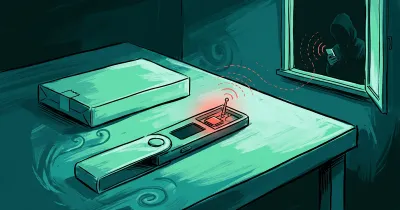
A cold wallet is not invulnerable. This month we have seen how devices tampered with in the distribution chain stole the 24 words during setup; we covered it in Ledger spy chip: how to buy a secure hardware wallet. The rule is to always buy it on the manufacturer’s official website.
 What if my crypto is on an exchange?
Then the key is not yours: it belongs to the exchange. What you see in the app is a balance, an internal entry saying how much the company owes you. The company controls the private keys to those coins. This is called custody.
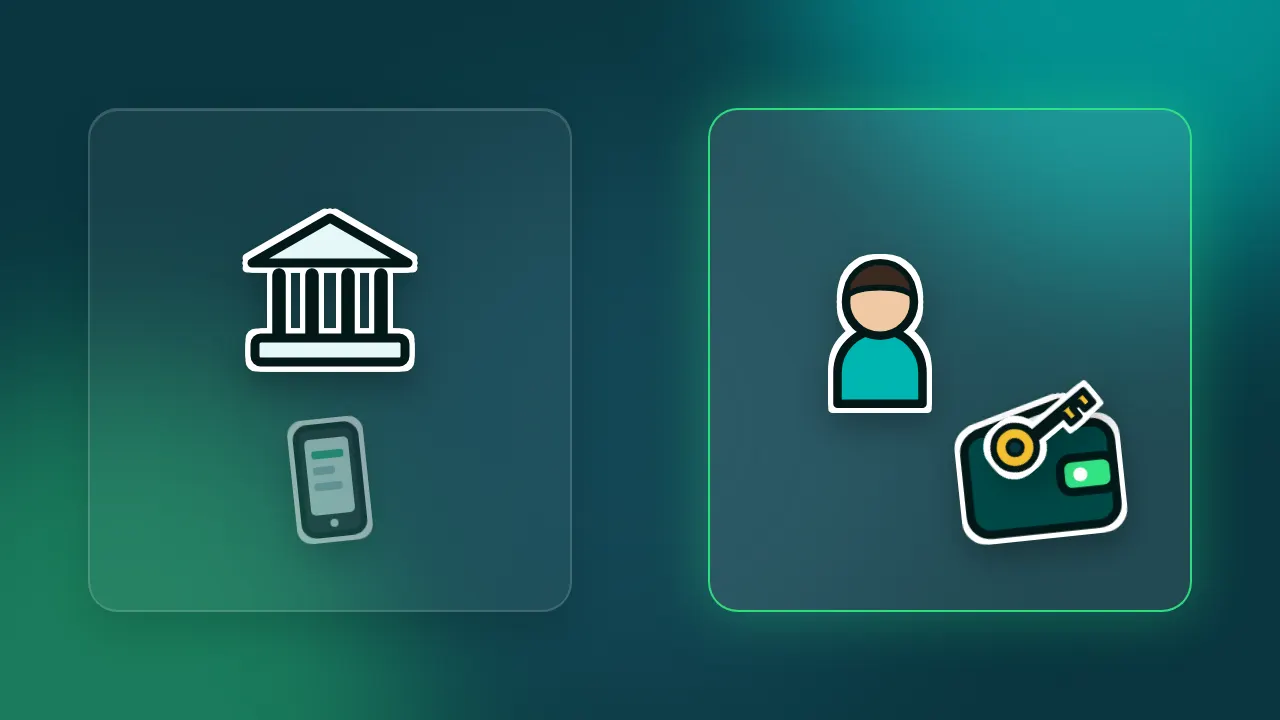
That is not necessarily bad. An exchange is the simplest way to buy with euros and, since July 2026, only those with a MiCA licence can operate in Spain, which obliges them, among other things, to keep client funds segregated. But if the company goes bust, freezes your account or suffers a theft, you depend on it. That is what FTX customers went through in 2022, and it is what lies behind the sector’s most repeated phrase: not your keys, not your coins.
Many users combine the two: they buy on a regulated exchange and move to self-custody what they are not going to touch. If you are wondering where to start, you have the options in the best alternatives in Spain now that Binance does not work.
 Does having your own wallet change anything with the tax agency?
Less than many people think. Three clear ideas:
- Moving crypto from your exchange to your wallet is not taxed. Nor from one wallet of yours to another. As long as they are still yours, there is no sale or swap. They are taxed when you sell them, exchange them for another cryptocurrency or pay with them.
- Self-custody does not make you invisible. The tax agency receives information from exchanges and can follow on the blockchain the trail of what leaves them. We go into detail in how the tax agency knows you have a cold wallet.
- Modelo 721 (Spain’s information return on crypto held abroad) does not include what you hold in your own wallet. It only covers cryptocurrencies held in custody by a third party not resident in Spain, above €50,000 at 31 December. You have it in the complete guide to Modelo 721.
What self-custody does demand is order: when you sell, you will need to be able to show where those coins came from and what they cost you. That is what exporting your wallets’ transactions is for.
Summary: types of wallet at a glance
| Type | Who holds the key | Advantage | Main risk |
|---|---|---|---|
| Exchange account | The company | The easiest way to buy and sell with euros | The platform going bust, freezing your account or being hacked |
| Hot wallet (app or extension) | You, on a connected device | Convenient and quick for everyday use | Viruses, fake links, carelessness |
| Cold wallet (physical device) | You, on an isolated chip | The safest for long-term storage | Buying a tampered one or losing the words |
 Frequently asked questions
So where are my bitcoins?
On the bitcoin blockchain, associated with one or more addresses. Your wallet holds the private key that lets you move them. That is why you can see your balance from any device on which you restore your seed phrase.
If I lose my Ledger or my phone, do I lose my crypto?
No, as long as you have your 12 or 24 words. With them you restore the wallet on another device or in another compatible app and recover everything. Without the words and without the device, nobody can give them back to you.
Can I have several wallets?
Yes, and it is common: a hot wallet for everyday use and a cold wallet for long-term storage, for example. Each one will have its own words.
Do I have to have a cold wallet?
No. It is a security decision. For small amounts you move often, a hot wallet or a regulated exchange may be enough. For amounts you could not afford to lose, cold self-custody is the safest option.
Do I have to declare the crypto I hold in my wallet?
Holding it is not taxed under IRPF (Spanish personal income tax); what is taxed is selling it, exchanging it or paying with it. Moving crypto between your own wallets is not taxed either. And what you hold in self-custody does not go into Modelo 721.
Your keys, your responsibility; leave your taxes in our hands
Having your own keys gives you control, and also the responsibility for your numbers adding up when you sell. If you have crypto spread across exchanges and wallets, send us your history and we will produce the document with all your exchanges and wallets using the global FIFO method the tax agency requires.
Sources: Bitcoin: A Peer-to-Peer Electronic Cash System (whitepaper) · BIP-39: 2,048-word mnemonic phrase · Regulation (EU) 2023/1114 (MiCA)

Víctor Lázaro
Marketing Director, Cryptoimpuestos.es