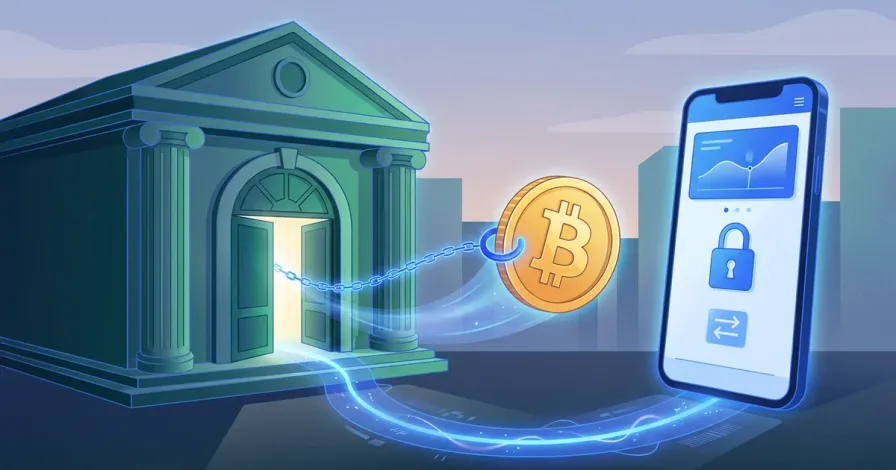
A few years ago, many banks raised objections to any transfer to an exchange. Today they sell you the bitcoin themselves. On 19 October the Sparkassen, Germany’s savings banks, started offering bitcoin, ether and other cryptocurrencies from their app. In Spain, BBVA has done so since July 2025 and Openbank since November that year.
The short answer: buying bitcoin at your bank is convenient and regulated, but it comes with small print. You usually pay a higher fee, you choose from just a few cryptocurrencies and, often, you cannot move them to your own wallet. And there is no special treatment from the tax agency: you are taxed exactly as if you had bought on an exchange. At CryptoImpuestos we have gone through each bank’s terms so you know what you are really buying.
 What has happened with the Sparkassen?
The Sparkassen are Germany’s largest network of savings banks. On 19 October 2026 five of them opened trading in bitcoin, ether, solana, XRP and polygon from their app, and the group plans to add between 30 and 40 more banks every month.
The terms say a lot about how banks are entering this world:
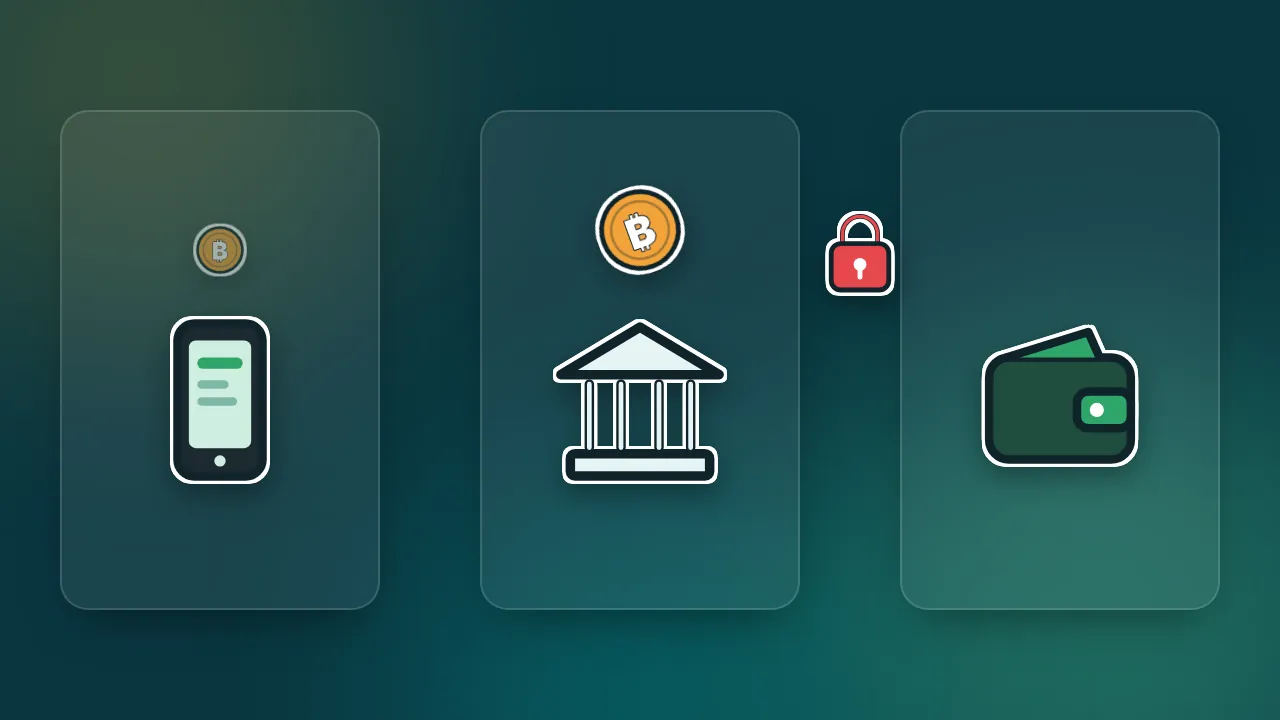
- Centralised custody. The cryptocurrencies are held by DekaBank, the group’s bank, which manages the private keys. The customer does not have them.
- No transfers to private wallets. They can only be transferred to authorised providers on a closed list. Sending them to your own wallet is not allowed.
- A fee of €0.99 per order, plus a margin built into the price that is not published as a fixed percentage.
It is not an isolated case. On 16 October Openbank Deutschland, the German subsidiary of Santander’s digital bank, joined ESMA’s register of MiCA-licensed providers.
 Which banks sell cryptocurrencies in Spain?
Today, the two big names are these:
- BBVA. It opened buying, selling and custody of bitcoin and ether from its app on 4 July 2025, after notifying the CNMV (Spain’s securities regulator). It uses its own key custody platform and offers the service without advice: the decision is yours.
- Openbank. It launched the service in Spain on 11 November 2025 with bitcoin, ether, litecoin, polygon and cardano, a fee of 1.49% per transaction with a minimum of €1 and free custody.
A bank does not need the same licence as an exchange. MiCA allows credit institutions to provide crypto-asset services after notifying their supervisor in advance, because they are already authorised and supervised as banks. The customer protection rules, such as keeping customers’ crypto separate from their own, are the same.
 What do you gain by buying bitcoin at your bank?
For many people, the main barrier to getting into crypto is not the price, it is distrust. That is where a bank has real advantages:
- Everything in the app you already use. No signing up to another platform, no verifying your identity again and no moving euros to third parties.
- An institution supervised in Spain. If something goes wrong, you complain to your bank and, if it does not answer, to its supervisor.
- Less risk of technical mistakes. There are no addresses to copy or networks to choose, which is where beginners lose the most money.
 And what do you lose?
Convenience has a price, and not only in fees:
- Few cryptocurrencies. Between two and five, depending on the bank. If you want something different, it is not there.
- Higher fees than many exchanges. 1.49% per transaction adds up if you buy and sell often. Always compare what you pay per order, including the margin in the price.
- The key is not yours. Just like on an exchange, what you see is a balance. And in some cases, such as the Sparkassen, you cannot even move the coins to your own wallet. Before buying, check whether your bank allows it.
- The Deposit Guarantee Fund does not cover cryptocurrencies. It protects your euro deposits up to €100,000, not your bitcoin. What protects your crypto is the obligation to keep it separate from the bank’s own assets.
If you are not sure what it means that the key is not yours, start with what a crypto wallet is.
 How is the bitcoin you buy at your bank taxed?
Exactly the same as bitcoin from an exchange. Where you buy changes nothing for income tax (IRPF):
- Buying with euros and holding is not taxed.
- Selling for euros, swapping for another cryptocurrency or paying with it is. The difference between what it cost you and what you get is a gain or a loss that goes into the savings tax base, at 19% to 30%.
- The global FIFO method applies. If you have bitcoin at the bank and also on an exchange, the tax agency treats them as a single pile: when you sell, you are deemed to sell the oldest first, wherever they are. We explain it in the FIFO method for crypto.
And two differences you will notice:
- The tax agency knows everything. A Spanish bank reports its customers’ balances and transactions to the AEAT (Spanish tax agency). There is no way a sale at your bank goes unnoticed.
- It does not count for Modelo 721. That return is for crypto held in custody by entities that are not Spanish. What you hold at a Spanish bank does not count towards the €50,000 threshold, although what you hold on foreign exchanges does. You have it in the Modelo 721 guide.
 Bank or exchange? How to decide without getting it wrong
There is no option that is right for everyone. Ask yourself these questions before buying:
- How much will you trade? To buy now and then and hold, the bank’s convenience may be worth it. If you buy and sell often, the fees add up.
- Which cryptocurrencies do you want? If it is only bitcoin or ether, the bank will do. If you want others, it will not.
- Do you want to hold your own keys? If your plan is to move your crypto to a cold wallet, check first that your bank lets you take it out.
- Where is the rest of your history? If you already have crypto on other platforms, opening one more means one more history to gather when you file your tax return.
If you prefer an exchange, you have the regulated alternatives in the best options now that Binance does not work in Spain.
Summary: buying crypto at the bank or on an exchange
| Bank (BBVA, Openbank) | Exchange with a MiCA licence | |
|---|---|---|
| Cryptocurrencies available | Between 2 and 5 | Hundreds |
| Fee | Openbank: 1.49% (minimum €1) | Varies, compare it on each platform |
| Who holds the key | The bank | The platform |
| Move them to your wallet | Depends on the bank | Usually yes |
| Income tax treatment | The same | The same |
| Counts for Modelo 721 | No, it is a Spanish entity | Yes, if the platform is foreign |
 Frequently asked questions
Is it safer to buy bitcoin at the bank than on an exchange?
It is simpler and supervised by a body you already know, but bitcoin is worth the same and goes up or down just the same. Safety from volatility does not exist anywhere. What changes is the operational risk and who you complain to if something fails.
Does the Deposit Guarantee Fund cover my bitcoin at the bank?
No. The Deposit Guarantee Fund covers the euros you have on deposit, up to €100,000. Cryptocurrencies are not deposits. What protects them is the bank’s obligation to keep them separate from its own assets.
Do I have to declare the bitcoin I buy at my bank?
Buying and holding it is not taxed. Selling it, swapping it or paying with it is, in the tax return for the year in which you do it. And since the bank reports to the tax agency, the transaction will appear in your tax data.
Can I move my bitcoin from the bank to an exchange or to my wallet?
It depends on the bank. The German Sparkassen do not allow it towards private wallets. In Spain, check your bank’s terms before buying if you plan to move it.
If I have bitcoin at the bank and on an exchange, how do I calculate the gain?
With the global FIFO method: all your purchases of that cryptocurrency are pooled, wherever they are, and when you sell, the oldest are deemed sold first. That is why you need the history from every platform.
Bank, exchange or wallet: we pull the history together
Wherever you buy, in your tax return it all counts as a single history. Send us your history and we will produce the document with all your exchanges and wallets using the global FIFO method the Spanish tax agency requires.
Sources: ms-aktuell: Bitcoin und Co. kommen in die Sparkassen-App (19/10/2026) · Openbank: press release on the launch of crypto trading in Spain · Finect: you can now buy bitcoin and ether at BBVA · Cointelegraph: BBVA gets the green light from the CNMV · Regulation (EU) 2023/1114 (MiCA)

Víctor Lázaro
Marketing Director, Cryptoimpuestos.es