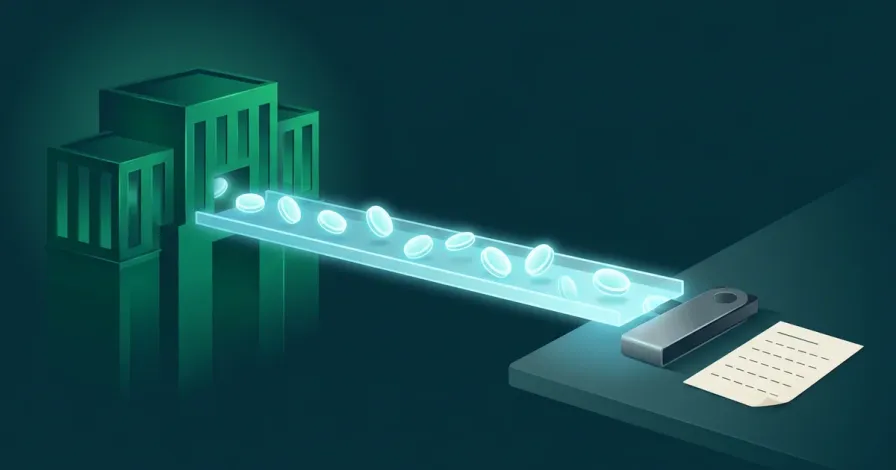
After the Binance hack, a lot of people have asked themselves the same question: what if I held it myself? Moving your crypto to your own wallet is simple, but it has a couple of steps where a slip cannot be undone: sending over the wrong network or losing the seed phrase.
The short answer: to move crypto to your wallet you copy the receiving address, choose the same network on the exchange, send a small test amount and, once it arrives, move the rest. For tax purposes, moving crypto between your own wallets is not a sale or a swap: it is not taxed. At CryptoImpuestos we have put together this step-by-step guide, with what you need to know so it causes you no problems on the blockchain or on your tax return.
 What is self-custody?
When you keep your crypto on an exchange, what you see is a balance: the company controls the keys. Self-custody means you control the keys yourself, with nobody in between. We explain it in depth in what a crypto wallet is.
It has a clear advantage: if an exchange closes, goes bust or suffers a theft, your coins do not depend on it. We saw it in the Binance hack and we cover it in crypto exchange bankruptcy.
And it has an equally clear cost: the responsibility becomes yours. There is no customer service and no “I forgot my password” button. It is not better or worse for everyone. If you prefer convenience and regulation, other options, such as buying bitcoin at your bank, work differently.
 Hot or cold wallet: which suits you?
- Hot wallet. An app on your phone or a browser extension. It is free and convenient for small amounts and frequent use. The key lives on a device connected to the internet.
- Cold wallet. A physical device that stores the key and signs transactions internally. It has a cost, but it isolates the key from the internet. It makes more sense for amounts you are not going to touch often.
If you opt for a cold wallet, always buy it from the manufacturer or an official distributor. We have already seen devices tampered with in the supply chain: we cover it in Ledger with a spy chip: how to buy a safe wallet.
 How to move your crypto to your wallet, step by step
- Set up the wallet and store the seed phrase. Before receiving anything, create the wallet and write down the 12 or 24 words on paper. No photos, no notes on your phone and no uploading them to the cloud.
- Copy your receiving address. Open it in the wallet, for the correct coin, and copy it with the copy button or scan the QR code. Check the first and last characters: there is malware that changes the address you have pasted.
- Choose the same network on the exchange. On the withdrawal screen, select the network your wallet supports for that coin. This is the key step, which is why it has its own section.
- Check whether a memo or tag is needed. We cover it just below.
- Make a test transaction. Send a small amount and wait to see it in your wallet. You will pay two fees, but it is the cheapest insurance there is.
- Send the rest and check the fees. Look at the fee before confirming, especially on networks with heavy demand. If the amount is large, check whether your exchange asks you for an extra step.
Above €1,000, providers regulated in the EU must verify that a self-hosted address is yours or under your control. If you are asked, it is not suspicion: it is the rules.
 The right network: the mistake that hurts most
The same coin can circulate on several networks. USDT, for example, exists on Ethereum, Tron, BNB Smart Chain and others. They are separate roads that do not connect by themselves: if your wallet expects to receive on one and you send on another, the coins may not arrive, and recovering them can be very difficult or impossible.
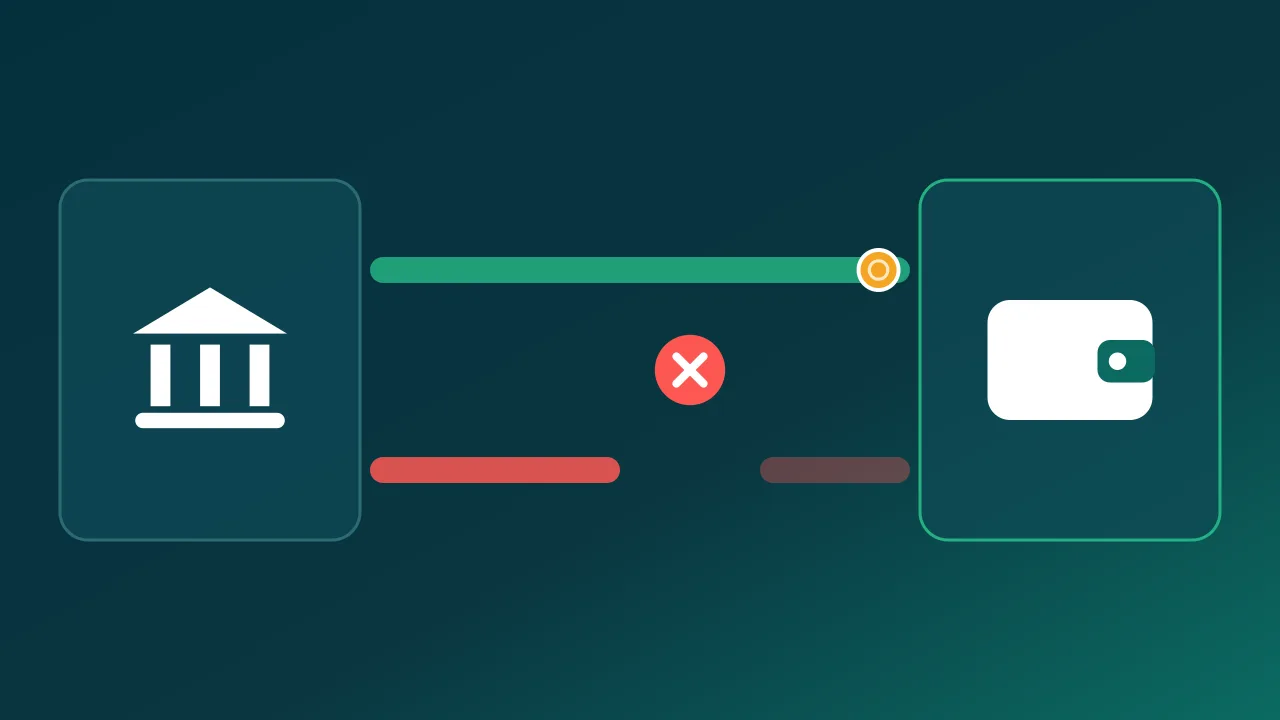
The rule is simple: the network you choose on the exchange must be the same one your wallet shows on the receiving address. A similar name is not enough.
 The typical mistakes when taking crypto off an exchange
- Wrong network. The one we have just seen, and the most expensive.
- Forgetting the memo or tag. Some coins, such as XRP, use an additional piece of data to identify the recipient when several people share an address, which is typical of exchanges. If you send to an exchange and it asks for one, without it your money can end up unallocated.
- Skipping the test because “I have done this before”.
- Running out of coin for the fee. On networks such as Ethereum, to move a token you also need some ETH in the wallet.
- Keeping the seed phrase in a photo or in the cloud. Whoever has it has your coins.
- Giving it to someone. Neither your wallet’s support, nor your exchange’s, nor anyone legitimate will ever ask you for it.
 Is moving crypto to your wallet taxed?
No. Moving cryptocurrencies between your own wallets, or from an exchange to your wallet, is not a sale or a swap. You still own the same coins. But there are three things you need to be clear about:
- You must be able to prove both are yours. If not, that movement can look like an outflow to a third party. The exchange’s history records the withdrawal, with its destination address and the transaction identifier.
- You keep your original acquisition cost. What you bought for €1,000 still cost you €1,000, wherever it is. For the global FIFO method, your coins are a single queue, no matter which exchange or wallet they are on.
- The network fee can be a small disposal. If you pay it in crypto, you are handing over part of your coins, and that can produce a small gain or loss. The amounts are tiny, but they are part of the calculation.
The common mistake here is a different one: a program or a report treating the transfer as a sale. That is why outflows from one place are matched with inflows to the other before calculating anything.
 Is self-custody declared on Modelo 721?
No. Modelo 721 is for cryptocurrencies held in custody by entities abroad when they exceed €50,000 at 31 December. What you keep in a wallet with your own keys is not held in custody by anyone, so it is not included. If you have doubts about what is still on platforms, we explain it in the Modelo 721 guide.
Not being included in that form does not mean it disappears. When you sell or swap those coins, they are taxed just the same, at their original cost.
Summary: moving crypto from the exchange to your wallet
| Step or situation | What to bear in mind | Is it taxed? |
|---|---|---|
| From the exchange to your wallet | Same network and a prior test | No |
| Between two of your own wallets | Being able to prove both are yours | No |
| Network fee in crypto | Part of your coins is handed over | It can be a small disposal |
| Sending to someone else’s wallet | It is no longer a transfer of your own | It depends on the transaction |
| Selling from your wallet | At your original purchase cost | Yes, under global FIFO |
| Crypto in self-custody at 31 December | No entity holds it in custody | Not included in Modelo 721 |
 Frequently asked questions
How long does the transfer to my wallet take?
It depends on the network and on how many people are using it. It can take anything from a few seconds to more than an hour. On top of that there is the time the exchange takes to process the withdrawal.
What happens if I send on the wrong network?
It depends on the networks and the wallet. Sometimes it can be recovered with technical knowledge or with help from the destination exchange, and sometimes not. That is why the test transaction exists.
Does the Spanish tax agency know I have moved my crypto to a wallet?
Exchanges that report to the tax agency disclose their customers’ outflows. Moving your coins is not a problem: it is not taxed, but it has to match your tax return.
Can I lose my crypto if my cold wallet breaks?
No, if you have your seed phrase: with it you can recover the coins on another device. What cannot be fixed is losing the seed phrase.
Do I have to declare that I have a wallet?
Having a wallet is not declared. What you declare are the sales and swaps you make and, if it ever applies to you, Modelo 721 for what is still held in custody outside Spain.
Don’t let the transfer count as a sale
The more platforms and wallets you use, the easier it is for a transfer to be calculated wrongly. Send us your history and we will produce the document with all your exchanges and wallets using the global FIFO method the Spanish tax agency requires.
Sources: Regulation (EU) 2023/1113 on transfers of funds and crypto-assets

Víctor Lázaro
Marketing Director, Cryptoimpuestos.es